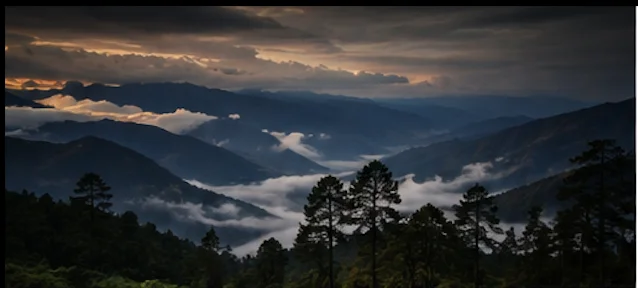
Most visitors come to Kumaon for its breathtaking landscapes, dense forests, and the thrill of spotting a tiger in the wild. But spend a few evenings here, especially around a crackling bonfire under a star-filled sky, and you will soon discover that the hills carry stories that go far beyond what any safari brochure can capture. The people of Kumaon have lived alongside these forests for centuries, and their folklore is rich with tales of spirits, curses, benevolent forest deities, and unexplained encounters that continue to surface even today.
For those who appreciate the deeper layers of a destination, Kumaon’s mysterious side offers a perspective that transforms a simple holiday into something far more memorable. And if you are considering where to stay while exploring this region, our guide on why smaller boutique stays offer more authentic experiences explains why an intimate setting like Corbett Foothills Retreat allows you to connect with these stories in a way that large resorts simply cannot.
Legends the Hills Still Whisper
The Kumaon region has been inhabited for thousands of years, and its oral traditions carry stories that predate written history. Every village, every forest patch, and every stream seems to have a tale attached to it — some romantic, some cautionary, and some that send a chill down your spine even in the warmth of the afternoon sun.
The Legend of the Naga Kings — Deep within the forests of Kumaon, local communities speak of the Nagas, serpent beings who are said to dwell in hidden underground chambers beneath the hills. These beings are not malevolent in the traditional sense, but they are fiercely protective of their territory. Villagers in remote parts of the Kumaon foothills still leave offerings of milk and rice at certain old trees and rock formations, believing that disturbing the Nagas brings misfortune to those who venture too deep into the forest without respect. Temples dedicated to Naga deities can be found across the region, their quiet presence a reminder that the hills hold secrets we may never fully understand.
The Story of the Gollu Devta — In the hills around Ramnagar and the Corbett landscape, many families worship Gollu Devta, a local deity believed to protect travellers and forest dwellers from harm. Legend has it that Gollu Devta was once a human who disappeared into the forest under mysterious circumstances and later began appearing to villagers in dreams, offering guidance and warnings. Even today, it is common for locals to whisper a quick prayer to Gollu Devta before entering dense forest areas, especially after dark. The deity is said to manifest as a flickering light among the trees, leading lost travellers back to safety.
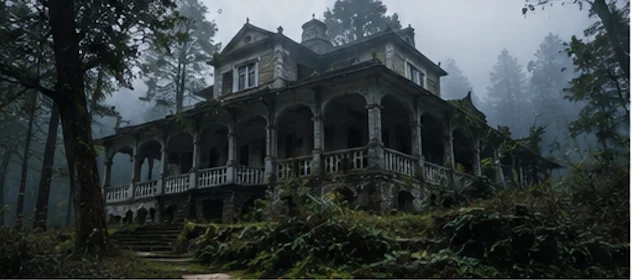
The Witch of the Kumaon Hills (Dakan) — One of the most persistent figures in Kumaoni folklore is the Dakan, a witch-like spirit said to roam the forests and village outskirts during the night. Unlike the cartoonish witches of Western stories, the Dakan of Kumaon is a deeply unsettling figure — described as an old woman with feet turned backwards, who lures unsuspecting travellers deep into the forest before vanishing without a trace. Parents in Kumaoni villages have used stories of the Dakan for generations to keep children from wandering into the forest alone at night. Many adults will admit, perhaps with a nervous laugh, that they still feel a quickening of the pulse when walking past a dark patch of forest after sunset.
Haunted Places of Kumaon
For travellers intrigued by the paranormal, Kumaon offers several locations that have developed reputations for unusual activity. These are not amusement park haunted houses — they are real places, often surrounded by forest, where locals and visitors alike have reported experiences they struggle to explain.
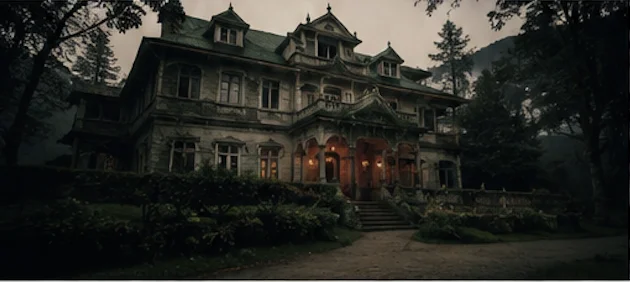
The Abandoned Bungalow at Mohan — Hidden deep within the Corbett reserve, near the edge of the forest where the Kosi river meets the woodland, stands an old abandoned bungalow from the British era. Locals in the nearby villages avoid this structure, especially after dark. Stories speak of colonial-era residents who died under mysterious circumstances, and subsequent visitors have reported hearing footsteps on the upper floor, the sound of a woman humming an old English tune, and the sensation of being watched from the dark windows. Forest officials who patrol the area rarely stay there overnight, preferring to complete their rounds and return to their quarters before sunset.
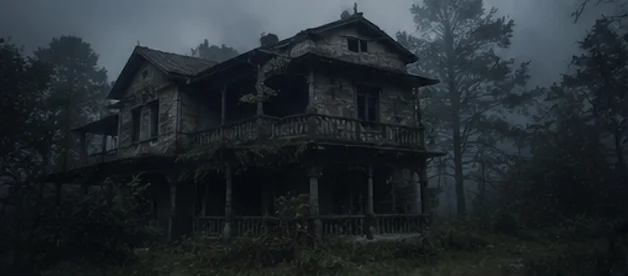
The Forest Rest House at Dhikala — One of the most famous — or infamous — forest rest houses in India, the Dhikala Forest Rest House has been the subject of countless stories shared by wildlife enthusiasts, photographers, and forest staff over the decades. Built during the British period, this sprawling rest house sits in the heart of the Corbett Tiger Reserve, surrounded by vast grasslands and dense forest. Many visitors have reported strange occurrences: doors opening on their own, the sound of someone walking on the veranda when no one is there, and an inexplicable feeling of being watched during the night. Some say the spirits of British officers who once managed the forest still patrol the corridors. Others believe the rest house is simply too close to the wild, and the boundary between the human world and the forest world blurs here more easily than elsewhere.
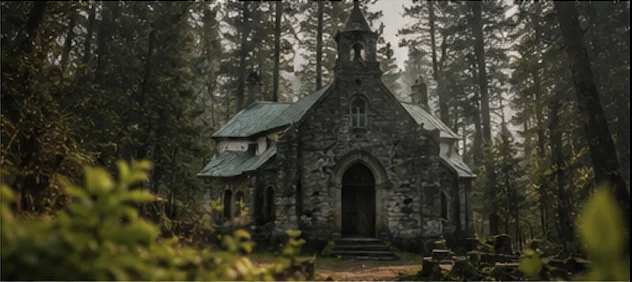
The Old Cemetery at Garjiya — Near the famous Garjiya Devi Temple, perched on a rock in the middle of the Kosi River, lies an old cemetery that dates back to the British era. The graves are overgrown, the inscriptions weathered and barely legible. Local legend says that on certain nights — particularly during the full moon — a woman in white can be seen walking among the graves before disappearing into the forest. While no definitive explanation exists, the cemetery remains a place that locals prefer not to visit after dark.
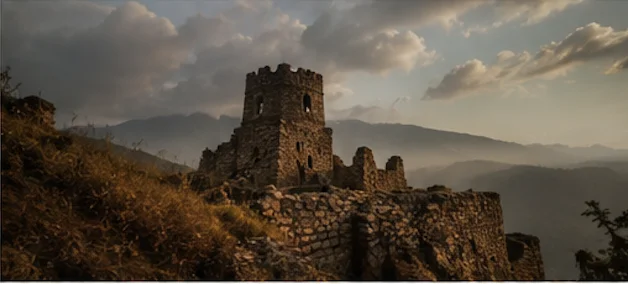
Ghostly Tales of Forest Rest Houses
The forest rest houses scattered across Kumaon’s wildlife reserves are some of the most atmospherically charged places you could ever spend a night. Built over a century ago, these structures have witnessed countless seasons, forest fires, wildlife encounters, and the comings and goings of forest officers, hunters, and naturalists from a bygone era. Their thick stone walls, high ceilings, and creaking wooden floors hold memories that some believe never truly fade.
Rest House No. 2 at Kalagarh — Located on the western boundary of the Corbett reserve, this rest house has a reputation that precedes it among forest staff. Multiple guards and rangers have reported seeing the figure of a tall man in a safari suit standing on the lawn at dusk, only to find the spot empty when they look again. A former forest officer who stayed there in the 1990s wrote in the visitor log about being woken up by the sound of footsteps circling his bed, though the room was empty and the door was locked from the inside. The logbook entries from that period, if you can access them, make for chilling reading.
The Baraipani Forest Rest House — Perched at the edge of a steep valley, this rest house is surrounded by dense oak and rhododendron forest that traps the mist and creates an atmosphere of complete isolation. Guests have reported hearing the sound of women laughing somewhere in the forest at night, though the nearest village is several kilometres away. Others describe vivid dreams that feel more real than ordinary sleep, and a persistent feeling that someone is standing right behind them when they look out of the windows at the dark tree line.
The Spirits of the River and Forest
Kumaon’s natural features — its rivers, cliffs, and dense forests — are not merely geographical landmarks in the local worldview. They are living entities, inhabited by spirits that demand respect and acknowledgment.
The Kosi River’s Benevolent Spirit — The Kosi River, which flows through the Corbett landscape and past the Garjiya Devi Temple, is believed by locals to be protected by a benevolent female spirit known as Kosi Mata. Fishermen and villagers who live along its banks offer prayers before entering the water, especially during the monsoon season when the river swells with dangerous force. There are stories of people who were caught in the river’s current and rescued by an unseen hand, which locals attribute to Kosi Mata. Even today, you will find small shrines along the riverbank where marigold flowers and incense are offered each morning.
The Forest Dwellers — Churails and Brahmarakshas — In the deeper forests of Kumaon, particularly in areas that have remained undisturbed for generations, locals speak of Churails (malevolent spirits of women who died under tragic circumstances) and Brahmarakshas (the restless spirits of priests or holy men who met violent ends). These beings are said to inhabit specific trees, caves, or clearings within the forest. Villagers who need to pass through these areas carry specific herbs, recite protective mantras, or simply avoid the locations altogether after dark. While modern visitors may dismiss these as superstitions, the consistency and detail of these accounts across different villages and generations suggest a cultural memory that runs very deep.
Unexplained Encounters in the Corbett Landscape
Beyond the traditional folklore, there are modern accounts from travellers, naturalists, and forest staff that add a contemporary layer to Kumaon’s mysterious reputation.
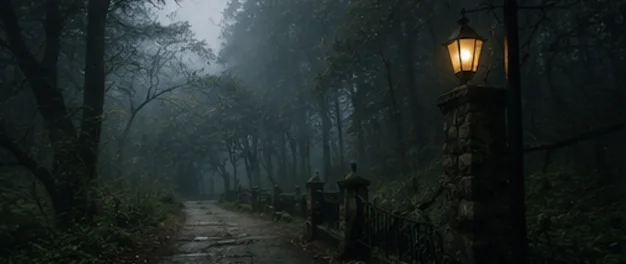
The Disappearing Fire — Several trekkers and wildlife photographers have reported an odd phenomenon in the forests near Ramnagar: a flickering orange light that appears at a distance during the night, seeming to move between trees, leading those who follow it deeper into the forest before vanishing abruptly. Forest department staff have a name for this — they call it “the wandering light” — and explicitly warn visitors not to follow it. Some attribute it to natural gas emissions or bioluminescent fungi, but those who have seen it describe it as behaving too intentionally to be a natural phenomenon.
Voices in the Wind — The Dhikala zone, considered the heart of Corbett, is known for its vast open grasslands surrounded by forest. Several visitors have reported hearing what sounds like distant conversations carried on the wind, particularly in the late evening when the forest settles into nighttime silence. The voices are indistinct, never clear enough to make out words, but the tone and cadence are unmistakably human. Forest guards who have spent decades in the zone simply smile when asked about it. “The forest speaks,” one of them once said. “You just have to be quiet enough to hear it.”
Why Kumaon’s Mysterious Side Adds to Its Charm
You might wonder — why include tales of haunted places and spirits in a travel blog? The answer lies in what makes Kumaon truly special. The region is not just a destination to be seen; it is a place to be felt. Its mystery is part of its identity, woven into the fabric of daily life for the people who call these hills home.
When you sit by the bonfire at Corbett Foothills Retreat, with the sounds of the forest around you and an expanse of stars overhead, the stories of the hills take on a different texture. They are not just folklore from a bygone era — they become part of your own experience. The distant call of a night bird sounds different when you know the legends. The shadows beneath the trees carry more weight. The forest becomes not just a place to observe wildlife, but a living, breathing entity with a history and a presence that extends far beyond what you can see.
For guests who are interested in the deeper cultural heritage of the region, the retreat’s experiences page offers a range of activities that connect you with local traditions, including village walks and storytelling sessions. And after a day of exploration, our accommodation provides a warm, welcoming space where you can reflect on the stories you have heard and the mysteries you have encountered.
Frequently Asked Questions
Are there really haunted places in Kumaon?
Kumaon has several locations — including old forest rest houses, abandoned bungalows, and colonial-era cemeteries — that are the subject of local ghost stories and paranormal accounts. While belief in the supernatural varies from person to person, the consistency of these stories across generations and the respect locals show for these places suggest that something in the atmosphere of these locations is deeply affecting.
Can visitors stay overnight at the haunted forest rest houses?
Some forest rest houses within the Corbett Tiger Reserve are available for overnight stays through the forest department booking system. Dhikala Forest Rest House, in particular, is a popular accommodation option for safari visitors. However, availability is limited and bookings must be made in advance through the official Uttarakhand Forest Department portal.
Is it safe to visit Kumaon given these stories?
Absolutely. Kumaon is a safe and welcoming destination for travellers. The ghost stories and legends are part of the region's cultural heritage, not warnings about actual danger. Like folklore in any part of the world, these tales are meant to entertain, teach, and preserve cultural memory. Visitors can explore the region without any concern for personal safety related to supernatural phenomena.
What is the Dakan in Kumaoni folklore?
The Dakan is a witch-like figure in Kumaoni folklore, described as an old woman with her feet turned backwards. She is said to roam the forests and village outskirts at night, luring unsuspecting travellers deeper into the woods before disappearing. The legend of the Dakan has been used for generations as a cautionary tale to keep children from wandering into the forest alone after dark.
Are there guided tours that explore Kumaon's folklore and mysterious places?
While formal ghost tours are not common in the region, boutique properties like Corbett Foothills Retreat offer storytelling sessions, village walks, and guided nature experiences where local guides share folklore and legends passed down through generations. These experiences provide a respectful and enriching way to connect with Kumaon's cultural heritage. Learn more on our experiences page.
What natural phenomena might explain some of the "supernatural" experiences in Kumaon?
Some phenomena like the "wandering light" reported in forests may have natural explanations — bioluminescent fungi, marsh gas emissions, or reflections from distant sources. The sounds of voices carried on the wind could be animal calls distorted by distance and wind patterns. However, for local communities, these natural explanations do not diminish the spiritual significance of these experiences. The mystery is part of what makes the forest feel alive and sacred.
Is there a connection between Kumaon's haunted places and its colonial history?
Many of the reputedly haunted locations in Kumaon — forest rest houses, abandoned bungalows, and cemeteries — date back to the British colonial period. These structures carried forward the cultural memory of their original inhabitants, and the isolation of these forest locations creates an atmosphere where stories naturally take root. The colonial history of the region is deeply intertwined with its supernatural folklore. For more on this era, read our post on 10 Unknown Facts About Colonel Jim Corbett.
Final Thoughts
Kumaon’s mysterious side is not something you will find in a standard travel itinerary. It is not listed on a sightseeing checklist or promoted by mainstream tourism. But it is there, waiting for those who are curious enough to look beyond the surface. The legends, the haunted places, and the stories that the hills still whisper are an invitation to experience Kumaon not just as a destination, but as a living, breathing landscape with a soul.
The next time you find yourself in the foothills of the Himalayas, sitting by a fire with the forest around you, listen closely. The hills have been telling their stories for thousands of years. If you are quiet enough, you might just hear them.
Plan your stay at Corbett Foothills Retreat, where the boundary between the wild and the welcoming dissolves, and every evening brings a new story. Browse our accommodation or get in touch to begin your journey into the heart of Kumaon — mysteries included.
Plan Your Stay at Corbett Foothills Retreat
Experience the tranquility of a boutique farmstay with personalised hospitality, organic farm-to-table dining, and easy access to Jim Corbett National Park.