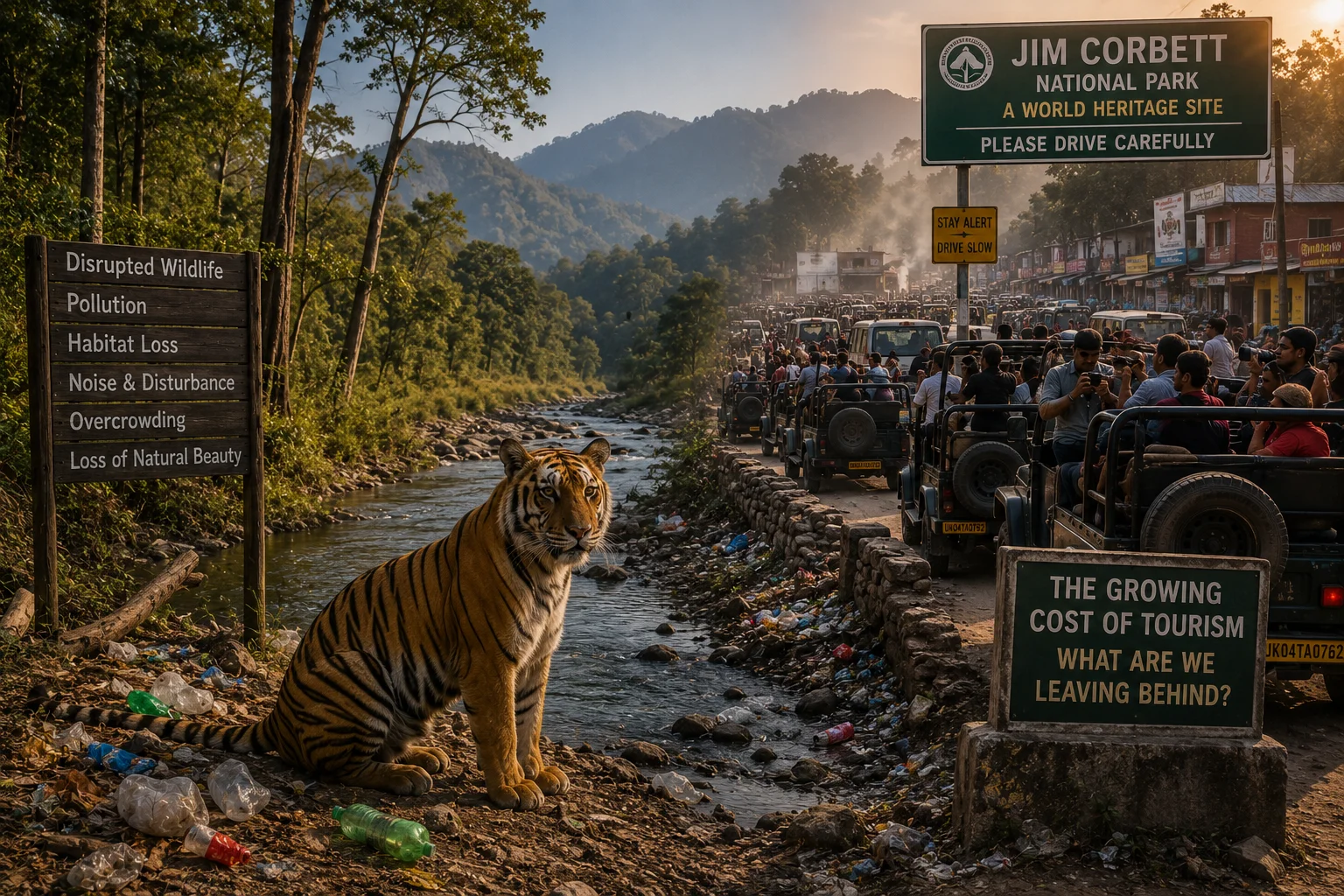
Jim Corbett National Park has never been more popular. India’s oldest national park attracts hundreds of thousands of visitors every year — families, photographers, adventure seekers, and international travellers — all drawn by the promise of wilderness, tigers, and the timeless beauty of the Himalayan foothills.
But popularity comes with a price that rarely appears on any bill.
Behind the soaring visitor numbers, the crowded safari booking windows, and the rapid expansion of resorts lies a quieter story — one of forests under pressure, wildlife adapting to constant disturbance, local communities navigating rapid change, and a destination grappling with the unintended consequences of its own success.
This is the hidden cost of mass tourism in Jim Corbett. Many first-time visitors do not realise what they are stepping into until they arrive — and by then, the booking is already made and the experience shaped by forces beyond their control.
The Double-Edged Sword of Popularity
Tourism is not inherently destructive. When managed responsibly, it funds conservation, supports local livelihoods, and fosters a deeper appreciation for natural heritage. Jim Corbett’s journey from a hunting reserve (established in 1936 as Hailey National Park) to one of the world’s most celebrated tiger reserves is a testament to how tourism can align with conservation goals.
The challenge emerges when growth outpaces planning.
Over the past decade, the number of visitors to Jim Corbett has risen dramatically. The park recorded over 4.5 lakh visitors in a recent year, with demand far exceeding the carrying capacity of many safari zones. This surge has triggered a chain reaction across the region — more vehicles, more construction, more waste, more noise, and more pressure on the very ecosystems that visitors come to experience.
Understanding these hidden costs is not about discouraging travel. It is about encouraging better travel — the kind that respects limits, supports responsible operators, and ensures that Jim Corbett remains wild for generations to come.
Environmental Impact: Vehicles, Waste, and Noise
The most visible cost of mass tourism in Corbett is environmental degradation.
Vehicle Emissions and Forest Disturbance
Every safari jeep that enters the forest burns fuel, emits exhaust, and disturbs the natural soundscape. During peak season, hundreds of vehicles criss-cross the same safari zones daily, their engines churning through forest tracks that were never designed for such traffic. The cumulative effect is measurable — increased air pollution within the reserve, soil compaction along frequently used routes, and disruption of animal movement patterns.
Wildlife species, particularly those with large home ranges like tigers and elephants, are forced to adjust their behaviour in response to vehicle presence. Studies from tiger reserves across India have documented shifts in activity patterns, reduced foraging time, and increased stress responses among animals in high-traffic zones.
Plastic and Solid Waste
The waste problem in and around Corbett mirrors the challenge faced by protected areas worldwide. Single-use plastic bottles, snack wrappers, and other non-biodegradable materials discarded by visitors accumulate along forest edges, riverbanks, and roadside stops. Despite bans on single-use plastics in Uttarakhand, enforcement remains inconsistent, and the sheer volume of visitors makes waste management a persistent challenge.
During peak holiday weekends, the amount of waste generated in the tourism corridor leading to Corbett can overwhelm local disposal systems. Much of this waste ultimately finds its way into the Kosi River catchment or remains scattered across the landscape, posing risks to wildlife that may ingest or become entangled in plastic debris.
Noise and Light Pollution
Noise pollution is one of the most underestimated threats to wildlife. The roar of safari engines, blaring vehicle horns, loud music from resorts, and the general hubbub of crowded tourism hubs create a sound environment that is fundamentally unnatural for a forest ecosystem.
Many bird species and mammals rely on acoustic communication for mating, territory defence, and predator avoidance. Chronic noise exposure can mask these signals, reduce breeding success, and force animals to abandon otherwise suitable habitat.
Light pollution from unchecked resort development further disrupts nocturnal wildlife, altering the behaviour of species ranging from insects to mammals.

Overcrowded Safari Zones and the Wildlife Stress Factor
Safari permits are limited by design — a mechanism intended to control visitor numbers and minimise disturbance. But the reality on the ground often tells a different story.
The Rush for Dhikala and Bijrani
Dhikala and Bijrani remain the most sought-after safari zones, and for good reason. Their open grasslands and dense forests offer the highest probability of tiger and elephant sightings. But during weekends, school holidays, and the peak tourist season between November and February, these zones can feel more like a busy thoroughfare than a wilderness.
When a tiger is sighted, the response is immediate and predictable. Radios crackle, vehicles converge from all directions, and within minutes, a single animal can find itself surrounded by a dozen jeeps, cameras clicking, guides shouting directions, and engines idling. This phenomenon — often called a “tiger jam” — has become so common that it has its own name in Corbett’s safari lexicon.
For the animal, this is not a spectacle. It is stress.
Research on wildlife tourism has consistently shown that repeated close encounters with vehicles alter natural behaviours. Tigers may abandon kills prematurely, avoid open areas during safari hours, or shift their activity to night-time when vehicles are absent. Over time, chronic stress can impact reproductive success and overall health.
The Limits of Carrying Capacity
The Corbett management has taken steps to address overcrowding — limiting the number of vehicles per zone, enforcing safari timing, and rotating zone access. But the gap between permitted capacity and actual visitor demand continues to grow.
Many travellers who book safaris weeks or months in advance, expecting a serene wilderness experience, find themselves sharing the forest with far more vehicles than they anticipated. This mismatch between expectation and reality is one of the most common reasons why some visitors leave Jim Corbett disappointed.
Lost Authenticity: The Commercialisation of Local Culture
Mass tourism does not only affect forests and wildlife. It also reshapes — and often erodes — the cultural fabric of the communities living at the destination.
The Homogenisation of the Kumaoni Experience
As Corbett has grown into a major tourism brand, the unique character of Kumaoni culture has increasingly been packaged, simplified, and commercialised for mass consumption. Traditional village hospitality is replaced by standardised resort experiences. Local cuisine appears on buffets stripped of context and origin. Cultural performances become scheduled entertainment rather than living traditions.
The pressure to cater to tourist expectations can push local communities away from their own customs. In the tourism corridor between Ramnagar and the park gates, the landscape is increasingly defined by hoardings, souvenir shops, and generic eateries rather than the character of the Kumaon region.
Displacement and Social Change
The economic opportunities created by tourism are real, but they are not distributed evenly. Land prices in the Corbett region have soared, making it increasingly difficult for local families to afford property in their own villages. Young people gravitate toward tourism-related jobs — driving jeeps, working in hotels, guiding safaris — while traditional occupations like farming and handicrafts decline.
This transition is not inherently negative. But when it happens rapidly and without a safety net, it can leave communities vulnerable to exploitation, seasonal unemployment, and the erosion of intergenerational knowledge.
At Corbett Foothills Retreat, we believe that tourism should strengthen local culture rather than dilute it. By sourcing ingredients from nearby farms, employing local staff, and encouraging guests to explore authentic experiences beyond the safari circuit, we try to ensure that the economic benefits of tourism reach the people who call this region home.
The Economic Divide: Who Really Benefits?
A common assumption about mass tourism is that it benefits everyone. More visitors mean more spending, more jobs, and more prosperity for local communities. But the reality is more nuanced.
Leakage and the Concentration of Wealth
In many tourism-dependent regions, a significant portion of visitor spending leaks out of the local economy. Large hotel chains, online travel agencies, and external tour operators capture a disproportionate share of tourism revenue, while local homestays, guides, farmers, and small businesses compete for what remains.
In Corbett, the rapid expansion of large resorts owned by outside investors has intensified this dynamic. These properties often import labour from outside the region, source supplies from distant wholesalers, and repatriate profits to corporate headquarters. The economic multiplier effect — the degree to which tourism spending circulates within the local economy — is far lower than it could be.
The Squeeze on Small Operators
For local homestay owners, freelance guides, and family-run eateries, the rise of mass tourism has been a mixed blessing. While visitor numbers have increased, so has competition. Large resorts with marketing budgets and OTAs (online travel agents) dominate search results and booking platforms, making it difficult for small operators to reach potential guests.
The pressure to lower prices, offer discounts, and match the amenities of bigger properties can push small businesses into unsustainable practices. Many operate on thin margins, with little capacity to invest in environmental measures or staff welfare.
Where Responsible Tourism Changes the Equation
Responsible tourism is not about rejecting growth. It is about redirecting it.
When travellers choose accommodation that prioritises local hiring, local sourcing, and community partnerships, more of their spending stays in the region. When they book directly with small businesses, engage local guides, and eat at family-run restaurants, they support a tourism economy that distributes benefits more broadly. Our organic farm experience is one example of how tourism can support local agriculture while giving guests a richer, more meaningful stay.
Water and Resource Strain
The Corbett region is not immune to the water stress that affects many parts of India. Mass tourism intensifies this pressure in several ways.
Peak Season Demand
During the winter tourist season, the population of Ramnagar and surrounding villages swells dramatically. Hotels, resorts, and homestays operate at full capacity, each guest consuming water for bathing, laundry, swimming pools, and landscaping. In areas where groundwater is already under strain, the additional demand can lower water tables and reduce availability for local residents.
Swimming Pools and Lawns
Resorts seeking to attract visitors often invest in water-intensive amenities — swimming pools, manicured lawns, and ornamental gardens. In a region where water is a precious resource, particularly during the dry summer months, these amenities represent a significant environmental cost. Large resorts can consume as much water in a single day as a small village uses in a week.
Wastewater and Runoff
The rapid pace of construction in the Corbett tourism corridor has outpaced the development of waste treatment infrastructure. Untreated or partially treated wastewater from hotels and resorts can contaminate local streams and groundwater, affecting both human communities and aquatic ecosystems.
Responsible properties address this through measures like rainwater harvesting, greywater recycling, and natural wastewater treatment systems. At Corbett Foothills Retreat, we have integrated these practices into our operations, recognising that sustainability is not an add-on but a fundamental responsibility for any business operating at the edge of a protected area.
Why Boutique, Responsible Properties Are Different
The challenges of mass tourism can feel overwhelming, but the solution is not to stop travelling. It is to travel better. And one of the most powerful choices a visitor can make is where they stay.
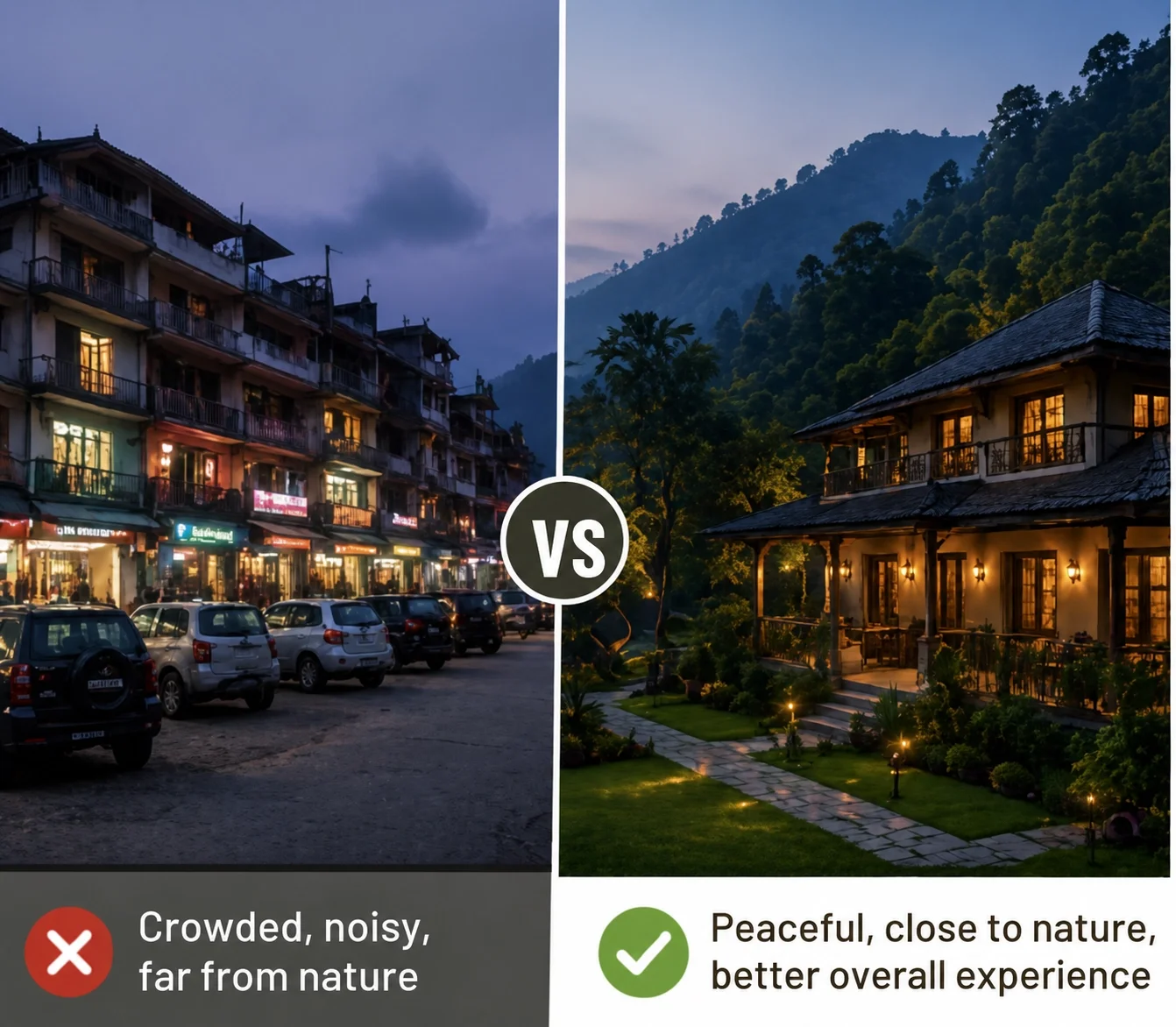
Boutique, responsible properties operate on a fundamentally different model from large commercial resorts. With fewer rooms, lower guest volumes, and a focus on quality over quantity, they leave a lighter footprint on the landscape while offering a richer experience for travellers.
Smaller Scale, Smaller Impact
A property with six rooms has one-sixth the water demand, one-sixth the waste output, and one-sixth the energy consumption of a resort with thirty-six rooms — all else being equal. But the difference goes beyond numbers. Smaller properties can integrate more thoughtfully with their surroundings, preserve natural vegetation, and avoid the sprawling construction that characterises large resort complexes.
Personalised Hospitality Over Mass Production
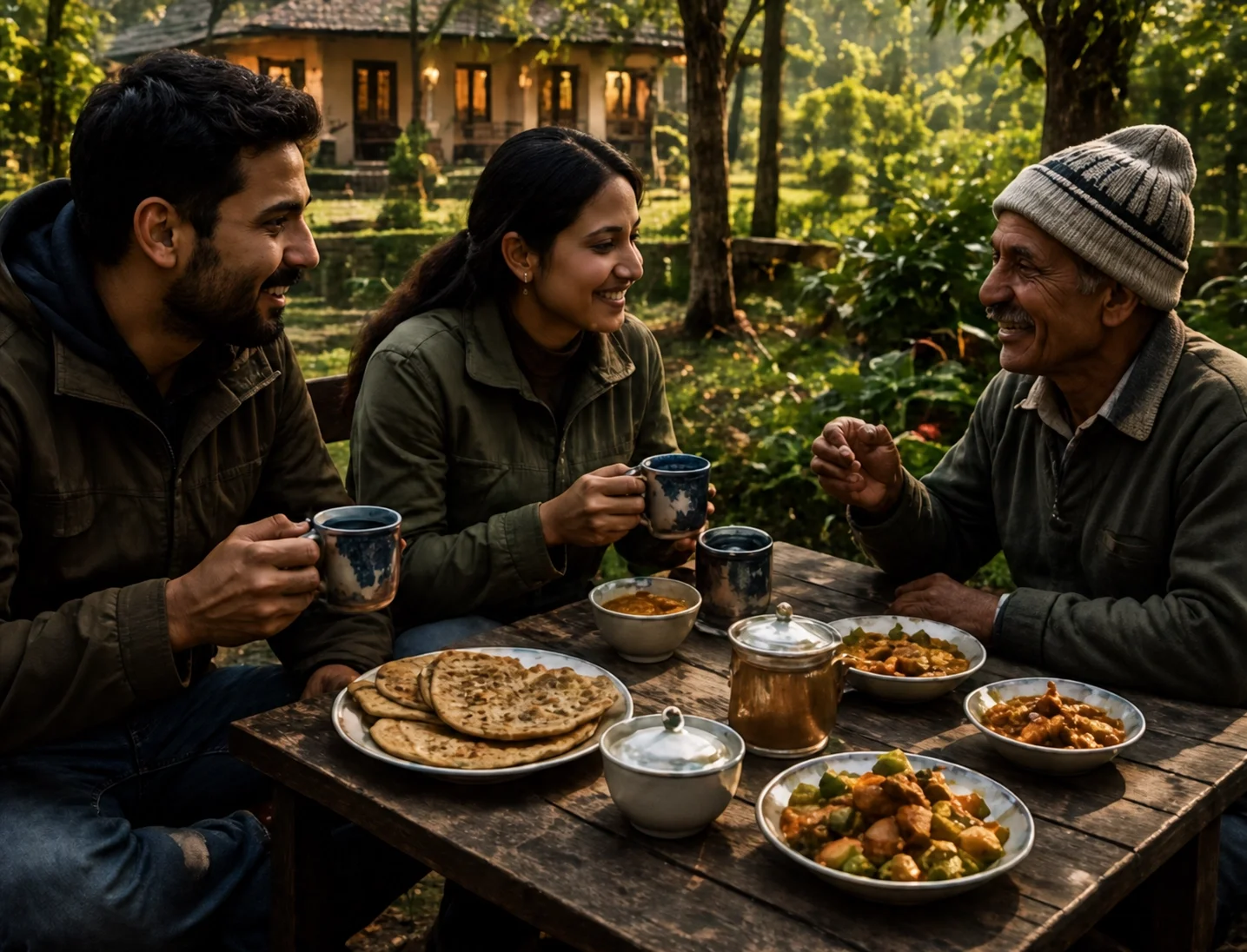
Boutique properties serve meals prepared to order rather than mass-produced buffets, reducing food waste and allowing kitchens to source ingredients locally. They can accommodate dietary preferences, introduce guests to regional Kumaoni cuisine, and create personalised itineraries that align with each traveller’s interests.
A Deeper Connection to Nature
Staying at a boutique property like Corbett Foothills Retreat means experiencing the forest on its own terms — quiet mornings, birdsong at dawn, evening walks along the forest edge, and the simple pleasure of being surrounded by nature without the distractions of crowds and commercial entertainment.
For a deeper look at why this approach to hospitality matters, read our post on why choose a boutique stay near Jim Corbett.
Choosing Sustainable Accommodation
Sustainability in accommodation is not about marketing claims or green labels. It is about real practices that reduce environmental impact and support local communities.
What to Look For
When evaluating accommodation near Jim Corbett, consider these indicators of genuine commitment to sustainability:
- Water conservation — Rainwater harvesting, wastewater treatment, and water-efficient fixtures
- Waste management — Composting, recycling, and a ban on single-use plastics
- Local sourcing — Food grown on-site or purchased from nearby farms
- Energy practices — Solar power, energy-efficient lighting, and reduced reliance on diesel generators
- Local employment — Staff hired from surrounding villages, fair wages, and training opportunities
- Community engagement — Partnerships with local schools, conservation groups, or cultural initiatives
The Organic Farm Experience
One of the most tangible ways to experience sustainable tourism in Corbett is through an organic farm stay. Properties that maintain working farms offer guests a direct connection to the land while reducing the carbon footprint associated with transporting food from distant suppliers.
At Corbett Foothills Retreat, our organic farm supplies fresh vegetables, herbs, and seasonal produce to our kitchen every day. Guests can walk through the garden, harvest ingredients for their meals, and learn about traditional Kumaoni farming practices. This is sustainable tourism in action — not as a concept, but as a daily practice. You can read more about our organic farm experience to understand how farm-to-table living works.
What Responsible Travellers Can Do
The burden of fixing mass tourism should not fall entirely on individual travellers. Policy changes, better enforcement, and industry reform are all necessary. But as a visitor, your choices have real power.
Book Smart
Plan your visit during weekdays rather than weekends. Avoid peak holiday periods when the park is most crowded. Book safaris in less visited zones like Dhela or Garjia, which offer excellent wildlife viewing with fewer vehicles.
Choose Your Stay Wisely
Before booking, research the property’s sustainability practices. Ask about waste management, water conservation, and local hiring. Support small and medium-sized properties that reinvest in the local economy rather than large chains that export profits.
Travel Light on the Environment
Carry a reusable water bottle, avoid single-use plastics, and take your waste back with you when local disposal facilities are inadequate. Respect wildlife by maintaining silence during safaris, never asking drivers to approach animals too closely, and refusing to participate in any activity that disturbs animals for a photograph.
Go Beyond the Safari
Corbett is more than a tiger reserve. Spend time exploring local experiences — village walks, riverside picnics, birdwatching, farm visits, and cultural interactions. These activities spread the economic benefits of tourism more widely and give you a richer understanding of the region.
Support Conservation
Several organisations work on wildlife conservation, habitat restoration, and community-based conservation in the Corbett landscape. Consider supporting their work through donations, volunteering, or simply spreading awareness.
If you are curious about what distinguishes a fulfilling trip from a disappointing one, read our post on why some visitors leave Jim Corbett disappointed — it offers practical insights for planning a visit that benefits both you and the destination.
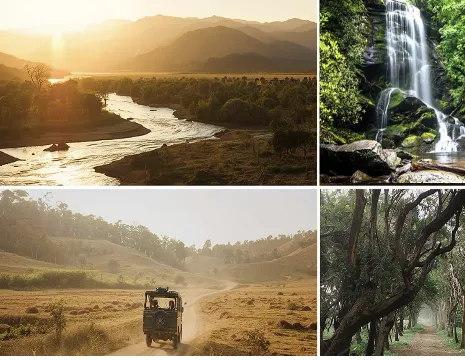
The Future of Corbett Tourism
Jim Corbett stands at a crossroads. The path of unchecked mass tourism leads to degraded forests, stressed wildlife, commodified culture, and a diminished experience for everyone. The alternative — responsible, well-managed, community-centred tourism — offers a way forward where both visitors and the destination thrive.
What Responsible Tourism Looks Like at Scale
A responsible future for Corbett tourism would include:
- Stricter enforcement of carrying capacity in all safari zones, with real-time monitoring of vehicle numbers
- Investment in waste management infrastructure across the tourism corridor, including recycling and composting facilities
- Support for small and local tourism businesses, including training, marketing assistance, and access to low-interest loans for sustainability improvements
- Community benefit-sharing mechanisms that ensure a portion of tourism revenue directly funds local development and conservation
- Promotion of off-peak and less-visited zones to distribute visitor pressure more evenly across the landscape
The Role of Travellers
As a traveller, you are not a passive consumer of a tourism product. You are a participant in shaping the future of the destination. Every choice you make — where you stay, how you travel, what you do, and what you expect — sends a signal about the kind of tourism you want to support.
The growing interest in boutique stays, farm-to-table dining, nature-based experiences, and responsible travel suggests that more visitors are ready to make conscious choices. The question is whether the tourism industry will keep pace.
A Personal Invitation
At Corbett Foothills Retreat, we have built our philosophy around the belief that the best travel experiences are also the most responsible ones. We keep our scale small, our impact light, and our connection to the local community deep. We do not promise guaranteed tiger sightings or manufactured thrills. What we offer instead is a genuine encounter with the Kumaon foothills — its forests, its farms, its food, and its people.
If this resonates with you, we invite you to explore our accommodations, learn about our organic farm experience, and reach out to plan a visit that respects the land and enriches your spirit.
The hidden cost of mass tourism is real. But so is the power of conscious travel.
Frequently Asked Questions
How does mass tourism affect wildlife in Jim Corbett?
Mass tourism affects wildlife in several documented ways. High vehicle traffic causes stress responses in animals, alters natural movement patterns, and can reduce feeding and breeding success. Noise pollution disrupts acoustic communication among birds and mammals. Close encounters during tiger jams can force animals to abandon kills or avoid preferred habitats during safari hours. Over the long term, chronic disturbance can impact population health, particularly for sensitive species like tigers and leopards.
What are the environmental impacts of tourism in Corbett?
Key environmental impacts include air pollution from safari vehicle emissions, soil compaction along frequently used forest tracks, plastic and solid waste accumulation along the tourism corridor, untreated or partially treated wastewater from resorts contaminating local water sources, groundwater depletion during peak tourist seasons due to high water demand, and light pollution disrupting nocturnal wildlife behaviour. The cumulative effect of these pressures can degrade the very ecosystem that visitors come to experience.
Are safari zones in Jim Corbett overcrowded?
Popular zones like Dhikala and Bijrani can experience significant crowding during weekends, holidays, and peak tourist season from November to February. While the forest department limits vehicle numbers per zone, demand far exceeds capacity during peak periods. When a tiger is sighted, multiple vehicles converging on one location can create a congested experience that diminishes the sense of wilderness. Visitors who choose less crowded zones like Dhela or Garjia, or who visit during weekdays and off-peak seasons, often enjoy a more peaceful safari experience.
Does local culture suffer from mass tourism in Corbett?
Yes, rapid tourism growth has led to the commercialisation of Kumaoni culture. Traditional hospitality is increasingly replaced by standardised resort experiences, local cuisine is simplified for mass buffets, and cultural performances become scheduled entertainment rather than living traditions. Rising land prices make it harder for local families to remain in their villages, and younger generations often move away from traditional occupations like farming. Responsible tourism that supports local businesses, hires local staff, and encourages authentic cultural exchange helps counter these trends.
Who benefits financially from Corbett tourism?
A significant portion of tourism revenue in Corbett leaks out of the local economy. Large resorts owned by outside investors, online travel agencies, and external tour operators capture a disproportionate share of visitor spending. Local homestays, guides, farmers, and small businesses often compete on thin margins. The economic multiplier effect is much higher when travellers choose locally owned accommodation, hire local guides, eat at family-run restaurants, and buy directly from local producers — ensuring that tourism benefits the communities living alongside the park.
How does tourism affect water resources in the Corbett region?
Mass tourism places significant strain on local water resources. During peak season, the population of the tourism corridor swells dramatically, with hotels and resorts consuming large volumes of water for guest rooms, swimming pools, laundry, and landscaping. Groundwater tables can drop during periods of high demand. Additionally, untreated or partially treated wastewater from poorly managed properties can contaminate local streams and groundwater. Responsible properties address this through rainwater harvesting, wastewater treatment plants, and water conservation measures.
What can travellers do to reduce their impact when visiting Corbett?
Travellers can make several impactful choices: book accommodation that demonstrates genuine sustainability practices (water conservation, waste management, local sourcing, local hiring); visit during weekdays and off-peak seasons to reduce crowding; choose less crowded safari zones; carry reusable water bottles and avoid single-use plastics; maintain silence and patience during safaris; explore local experiences beyond the safari — village walks, farm visits, birdwatching, and cultural interactions; and support conservation organisations working in the region. Every conscious choice helps protect what makes Corbett special.
How is Corbett Foothills Retreat different from large resorts?
Corbett Foothills Retreat operates on a fundamentally different model from large commercial resorts. With only six rooms, the retreat has a fraction of the environmental footprint — lower water and energy consumption, less waste generation, and minimal light and noise pollution. Meals are prepared to order using ingredients grown on our organic farm or sourced from local producers. The property supports local employment, follows sustainable practices including rainwater harvesting and composting, and offers guests a peaceful, immersive connection with the forest and Kumaoni culture rather than a standardised resort experience.
What is the future of tourism in Jim Corbett?
The future of Corbett tourism depends on the choices made today by travellers, businesses, and policymakers. A responsible future includes stricter enforcement of safari carrying capacity, investment in waste and water infrastructure, support for small local businesses, community benefit-sharing mechanisms, and promotion of off-peak travel and less-visited zones. Travellers increasingly seek authentic, responsible experiences, creating growing demand for boutique properties, farm-to-table dining, and nature-based activities that respect the forest. The path forward requires moving from volume-driven tourism to value-driven tourism — where quality of experience matters more than visitor numbers.
Plan Your Stay at Corbett Foothills Retreat
Experience the tranquility of a boutique farmstay with personalised hospitality, organic farm-to-table dining, and easy access to Jim Corbett National Park.